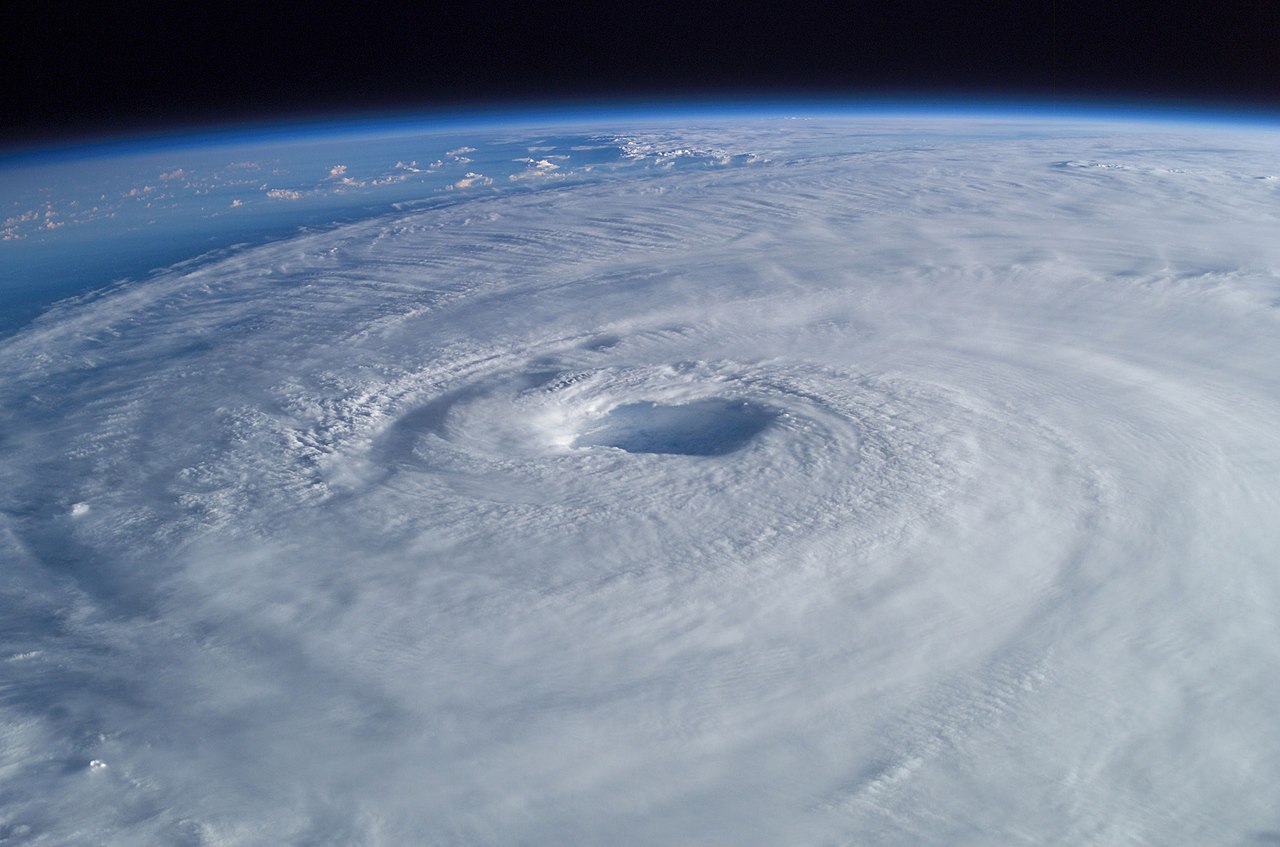
Thursday, January 30, 2014

The Catamarca Mudslides

For the second blog post from the Earthquakes group, I wanted to talk about the recent storm that hit Argentina last week, especially the mudslides that have impacted the Catamarca region. 

On Thursday night, five people were killed in landslides triggered by the recent heavy rains. At least eight people (five women and three children) remain missing, and another 600 have been evacuated from the towns of El Rodeo and Sijan. The storm pushed heavy boulders into houses, cars, and roads, causing untold property damage. President Christina Fernandez has ordered government agencies to assist with relief and reconstruction in the affected areas, and Security Minister Cecilia Rodriguez has been sent in to join the crisis committee. She specializes in dealing with emergencies and disasters, and has experience working in Haiti, Panama, Kosovo, and El Salvador. 

Nearly all of Argentina was affected by this storm, with a cold wave passing through that included rain, hail, and heavy winds. However, Catamarca was overwhelmingly the area most affected. This is because the area is geographically more vulnerable. Communities in mountainous areas are more likely to have mudslides due to the amount of steep slopes, especially when they are near sources of running water. However, this area was also vulnerable because it is more rural. Since the houses are not as well-constructed as in other areas, and with less resources in the event of an emergency, these communities were already set up for failure. This is another example of what we were talking about in class; how those with less money and less resources are affected by natural and man-made disasters more. One famous example was the earthquake that hit the island of Hispanola. While the Dominican Republic was able to recover with only a minor crisis, their poorer brothers in Haiti has less resources and suffered a full-blown disaster, from which they never would have recovered without foreign aid. As of yet, there have been no reports of what exactly President Fernandez intends to do with regards to aid, and how the "crisis committee" and Minister Rodriguez plan to start reconstruction.

What intrigued me about this disaster was how commonplace it seems. We are so accustomed to seeing huge disasters on the news that a mudslide in a place as far away as Argentina seems like a minor occurrence. The question I have is: how does the media decide which disasters are "important" enough to report on? Is it the ones with the highest death toll? The most dramatic disasters? Or simply the ones they think the audience will care about? We do tend to report more on those disasters that fall closer to home, like when Hurricane Sandy hit New York in 2012. We also focus on disasters that appeal to our humanity, like the devastation of Typhoon Haiyan in the Phillipines. I think that this would be an interesting question to discuss in class, because with the growing popularity and influence of social media, there is no doubt that it now plays an important role in highlighting and solving international crises.

Long Term Health Problems After Natural Disasters

When thinking about what to write about for this blog post I came across an article about the long-term health problems that occur after natural disasters strike. I thought this was something that was really interesting and wanted to know more about. We can infer that after a natural disaster there are going to be health problems, but I was interested in learning exactly what health problems and for how long they had an impact on these areas.

It was something that we have touched upon in class. The idea of what happens to these areas after the cameras stop rolling and the world stops paying attention to them. After the initial injuries and devastation, what are the long term effects that these people have to live through and deal with. I think that is something that is really important to pay attention to. Because so many times we stop hearing about these places, and they are still suffering and dealing with the disastrous effects of what happened. 
The article explains that “Some of the greatest challenges these people undergo is not the natural disaster itself but the residual problems stemming from the disaster, namely the long-term health problems kindled from the calamity.” This also makes me wonder, how long should the aid keep going to these places? And when does it stop and who decides it is time to stop? If the worst part of these events is the aftermath shouldn’t there be continually more aid going to these places long after the disaster occurs? 

There are three main categories of long term health problems they are mental health, communicable diseases, and health service system, damage done to the health service infrastructure in the long run. I feel like this idea of mental health often gets over looked. Even though it is one of the most common side effects of natural disasters. These long term mental health problems cause a lot of problems as the people try and return to a sense of normalcy. They interfere with going back to work and attempting to live a normal life after the devastation. This really makes me wonder what people can do to help with mental health as a long term effect, because it is something that does not just hurt the individual but the country as a whole.

The second big problem that I feel we don’t really think about is the effects on the infrastructure of the health system. The article talks about how because these disasters wipe out a lot of the resources, in the area a lot of health professionals leave especially doctors, because they can’t find any work. I found this very interesting because I feel like you would think a lot more health professionals would go to these areas, but it makes sense when you think professionally speaking, a previously high paid doctor is not going to be able to get the same work in a disaster struck area then he would in an area that was unaffected. 

This article made me really wonder a lot about what the long term effects of natural disasters are, and what the response should be, and to what extent. It was really interesting to learn about all the different effects, the article can be found here http://www.usnews.com/news/articles/2014/01/06/long-term-health-problems-after-natural-disasters-strike .  

- Acadia Ryder

Wednesday, January 29, 2014

What We Talk About When We Talk About Man-Made Disasters


This is the weekly blog post from the "Hurricanes" group; and in advance, I would very much like to apologize for any poor formatting here. This is actually my first time ever posting in a blog!

Anyway.

Thoroughly engrossed by our previous conversations largely concerning natural disasters, I really wanted to push the envelope with this post. So while searching for a concrete example of recent man-made disasters, I stumbled upon this heart-wrenching reminder of how the goings-on in Syria are not resolved issues simply because CNN has ceased to incorporate them into its programming (http://www.independent.co.uk/news/world/middle-east/the-politics-of-starvation-syrias-civilians-go-hungry-after-months-of-sieges-9094281.html).

Widespread starvation is increasing in its severity throughout countless communities in the country as a result of the sieges still taking place. The sheer scarcity of food has driven the price of rice in some areas to be $40/kilo as opposed to the typical $2/kilo. But this isn't merely about economics--by any means. Hundreds of thousands of people are now cut off from any regular flow of goods necessary to survival as a result of political turmoil between the Syrian government and multiple opposition groups.This particular article deals with two especially hard-hit cities, Zahraa and Nobl, where "besiegers [Sunni rebels] ... accuse the Shia townspeople of supporting the government of President Bashar al-Assad and are seeking to starve them into submission" (Cockburn). Select convoys await the opportunity to send aid to these communities, and some have even found themselves in the middle of gunfire as a consequence. Later in the piece, the situation as a whole is not once, but twice, assigned the title of "disaster."


The question I pose here today is--is it actually a disaster? The Syrian Civil War has often been referred to as the Syrian Crisis. However, our last class successfully differentiated crises from disasters, leaving us  now (I think) to truly consider where the mass starvation stemming from armed conflict is located within our new understandings. Is this a disaster if food is available somewhere within Syria and is "just" not being provided to the citizens who need it? What does the atmosphere of political retribution imply for whether or not we say this is a disaster. How many people have to suffer before we tip the scale from one extreme to the next?  In my opinion, regardless of the politics, this is a high-impact and long-term devastation inflicted upon too many of Syria's people. Courses of action in response have already been under way,  and international norms are certainly in question (recall al-Assad's "alleged" use of chemical weapons, the expected behaviors of the international community, etc).
Where do you all stand on this issue? I think that we definitely need to talk about this.
-Anthony DeSantis   


Thursday, January 23, 2014

The Shoreham Nuclear Power Plant, a brief background and personal story.

I have a feeling like we're going to talk a lot about nuclear power plants in many of our class sessions, (and I know I didn't have to post about it, but…) I just wanted to put up some simplified information about nuclear power plants in general, and elaborate a bit on the nuclear power plant on long island I mentioned last week. My grandfather told me all kinds of stories about the plant when I was growing up, so naturally I was intrigued and I've done a lot of research in my time. I hope you all find it as interesting as I have!

The splitting of an atomic nucleus into smaller fragments is called nuclear fission. Nuclear fission is the process that occurs in nuclear power plants. Energy that is given from nuclear power plants is often considered clean and efficient, however very dangerous. Nuclear meltdowns are not uncommon for plants and yield catastrophic results. Places to dispose radioactive waste material is also scarce. There are many sides to the installation of nuclear power plants, this leading to much needed debate before one is constructed and put to use.
The construction of the Shoreham Nuclear Power Plant was announced to the public on April 25, 1965 by LILCO. Shoreham would be a 500 MW nuclear power plant that was being pushed as a cheap, safe, and reliable form of energy. Power companies were pressured by AEC to convert to nuclear energy due to the high demand for electricity on Long Island, NY and the possible efficiency of nuclear power. The plans to build the plant were delayed when it was decided that this plant would produce now an 820 MW as compared to the original 500 MW which increased the cost of construction by about $150 million dollars. The construction of Shoreham began in 1973, allowing just enough time for my Grandfather to be put on the job to help build it being employed by LILCO after his time in the Navy. My Grandfather was beside himself when current events continued to show nuclear power plant related tragedies around the world such as Three Mile Island, and Chernobyl. He couldn’t believe that after all the hours he put into creating this technological revolution, the government simply wasn’t going to allow it on the grounds of fear and negativity towards utilizing nuclear energy created by the media.

On May 19, 1989 LILCO agreed not to operate the plant in a deal with New York State under which most of the $6 billion cost of the unused plant was distributed to long island residents. In 1992, LIPA bought the power plant from LILCO. The decommissioning of the plant would begin under their control. By 1990 my Grandfather was working for LIPA, then four years later in 1994, the plant was completely decommissioned, again with the help of my Grandfather! He was actually put on the team to deconstruct the plant simply because of his experience constructing it, and he wasn’t going to say no, it paid well and there was nothing he could do about it anyway. The decommissioning of the plant seemed like a great victory for the government, but in the long run, and for all the workers and long island residents today, it was a huge loss. During this entire legislative process, the beneficial outcome was never considered, most likely due to the increasingly negative media. After the Power plant was finished, it was pristine. It was the safest nuclear power plant the United States has ever seen on its soil due to all of the extra safety precautions added to it after each disaster. In theory, running the plant could have yielded a lot more good than bad... but we will never know. Could it have melted down? of course, that’s a risk every NPP takes, but could it have also still been providing cheap cleaner energy to LI residents? Yes, but that is just a question we will just have to keep asking.  

Wednesday, January 22, 2014

Hurricane's Blog 1

Coming from the “Hurricanes” group is this blog post following an article written by Tim Hanstad and Roy Prosterman, the president and founder respectively of the nonprofit organization Landesa, which works towards securing land rights to the poverty-stricken in the world. This New York Times article, titled “How the Poor Get Washed Away,” argues that not even natural disasters affect the world’s social system equally. The world’s poorest people, with no rights or claim to land are hurt far worse than most others (relatively speaking), greatly due to the fact that their living conditions cannot tolerate the destructive power of such disasters. Most rural families in the developing world struggle with the rights to land ownership, and therefore cannot build homes (if they even have access to homes) to withstand potential natural dangers.
What is more, according to Hanstad and Prosterman, such insecurities within a country not only consequently result in difficult disaster recoveries, but also add to the struggles in economic development, overall poverty, and social tensions. Examples given by the article give some perspective to these ideas: a cyclone in Orissa, India hit poor fishermen hard by their refusal to heed warnings from the government (believing them to be ploys of eviction); government officials of Tacloban, Philippines are debating whether to take land from a squatter camp; and over 100,000 in Haiti are left with hardly any shelter after the earthquake. One situation in Aceh, Indonesia, however, is seeing great growth in the economy and falling poverty levels after having given those poor affected by the calamitous tsunami of 2004 new secure land rights (among other progressive reforms).
Much of what this article focuses on is the vulnerability of the landless poor. It is not unlike what author Hannigan says in his Disasters Without Borders in that vulnerability is most important to focus on to alleviate suffering from natural disasters. There can be as much response and aid to post-disaster situations as can be given, but if the vulnerability of any country’s inhabitants are not considered, there will be slow progress on the subject of natural disasters in the international community. 
Obviously, giving proper property rights to these poor families will not be the end-all solution to the international debate as to how to deal with the periods immediately before and after disasters. But the authors of this article make a sound point: there are those who are hit worse than others, and certain resolutions (i.e. property rights) have been demonstrated to be effective in both the recovery period, and the warning period (if there can be one) of a disaster. It would seem that an end to poverty would be a great relief to a great number of issues plaguing the international community. 

The link to the article is here:

http://www.nytimes.com/2014/01/15/opinion/how-the-poor-get-washed-away.html 

Tuesday, January 21, 2014

Hey all! This will be the blog post for 1/24 from the “Earthquakes” group. The Economist’s twitter account tweeted an article last week that I think really relates to our class. The piece comes from a correspondent in London with the initials C.R. and is titled “Fracking and House Prices: Buyer Beware.”
In a nutshell, the piece reports on the growing trend of housing prices in the areas of increased oil fracking. Citing the research of an NBER paper which documented various housing prices in the New York and Pennsylvania areas between ’95 and ‘12, the author purports that properties close to shale-gas developments fall when they rely on ground-water sources, and are slightly boosted when the water supply is piped in from elsewhere. The author points to future homeowner’s expectations that oil reserves adjacent to their potential property could taint the local water supply as a rationale for the fluctuation in home values. This phenomenon however is not worldwide as the author notes that similar trends of housing price alterations to flood risks are occurring in parts of Britain. Finally, the author ventures that a possible cause for more acute homeowner awareness to environmental factors affecting their home is the increased availability of information about such issues. An example of this is Britain’s Environment Agency and other similar organizations providing maps of major flood zones, dangerous rivers and tides, along with locations of oil fracking zones.
On the exterior, this article may not have international implications, but there are global undertones to the issue discussed. As you all probably know, in recent years the United States has been using practices such as fracking, offshore drilling, and other new techniques to more effectively extract the wealth of oil and natural gas that sits under the North American continent. Due to this, the U.S. is tracked to become oil independent in the next few decades. While this is a great economic development for America, it is saddled with some related environmental dilemmas which I think are evidenced in this article from The Economist. Increased amounts of fracking and other new oil harvesting methods have necessitated the building of the Keystone XL pipeline to transport crude oil from sands in Canada, the Dakotas, and Montana all the way to refineries and ports on the Gulf Coast. While all the gas developments popping up have artificially manipulated housing prices in the real-estate market via consumer expectations, as written about in The Economist, they also carry with them the increased chance for an oil related disaster on the North American continent.
Although it was an offshore spill, few could forget the BP disaster in the Gulf just a few years ago, so the greatly amplified oil and natural gas activity in America’s heartland and Canada raises a few necessary questions. Namely, what are the responsibilities of the often multi-national corporations drilling and fracking oil in multiple countries? Who is to inform the people living in direct relation to these events of safety, geographic information, etc.? Who is responsible for potential disasters? These are some of the various questions that are fundamental to every potentially environmentally ruinous industry worldwide; some of these being nuclear energy, carbon emissions, or as was the focus in The Economist article, oil fracking in North America.

All of the aforementioned questions stem from a central issue surrounding disaster politics and the environment, one that was at the heart of the first chapter of Hannigan’s “Disasters Without Borders.” Who coordinates preparation for potential disasters?; who is burdened with informing the people of hazardous environmental practices?; who is responsible for the safety of those involved in a disaster?; and who gives aid to areas affected by disasters? Of course, numerous different organizations and individuals collectively shoulder this duty. Institutions such as the Red Cross, UNICEF, FEMA, etc. all contribute to fulfill responsibilities. However, as highlighted in the article, NGO’s such as the Environment Agency are also getting involved by publishing area flood maps and topography. Additionally, state governments in the U.S. and Australia are also disseminating information about the dangers of regional oil fracking to people directly involved. This trend is indicative of a change that I believe is necessary for the betterment in the international environmental disaster field. The integration of the endeavors of governmental, non-governmental, and supranational institutions in striving to alleviate the pains inflicted by environmental disasters without borders. With more extensive and industrious ventures in oil, nuclear, and other potentially environmentally treacherous industries it has become necessary for not only larger extensions of the state, but also grassroots, and local NGO’s all coordinating to prepare, inform, and relieve victims of international environmental disasters.

Thursday, January 16, 2014

Who's Your Type?


What do Sudanese famine and the Chernobyl nuclear accident have in common? Is there anything to be learned from a response to a drought when assembling aid for typhoon victims? Not all disasters are alike and the responses to them vary as well. Our task, as political scientists, is to uncover patterns of similarity and difference that will help us in making sense of the world of disasters. This is a little bit like the analogy questions on SATs.

Should we study disasters as variations on the same kind of phenonmenon?


TYPHOON : HURRICANE
RED : MAGENTA


Should we emphasize the consequences of certain disasters?


DROUGHT : REFUGEE FLOWS
SPEEDING : TICKET

Should we differentiate between disasters based on the role that humans play in their prevention / consquences?


TORNADO : NUCLEAR ACCIDENT
ROCK : SCISSORS

Should we consider the variation among disasters based on the extent to which they affect multiple countries?


LOCAL FLOODING : TSUNAMI
CITY HALL : UNITED NATIONS ORGANIZATION

Should we study the degree to which we are certain about the outcome of disasters?


EARTHQUAKE : CLIMATE CHANGE
CONTRACT : LOTTERY

Whether or not all these analogies hold up when you think about them more deeply, they all raise valid lenses through which we can study the nature of disasters, their sources, consequences, as well as the likelihood, extent, and kind of international intervention. Finding the right analogy is the biggest challenge. It is important to remember that there is no single answer although all the answers should stem from a theory that can support (y)our argument and that allows us to consider evidence from a variety of sources in a systematic way. Only this approach permits comparisons of seemingly very different instances of disaster and even make them productive. So go ahead, see if you can come up with a lens and relevant examples of your own!