Thursday, May 1, 2014

South Korea Ferry Disaster

After the Ferry disaster that put hundreds of passengers’, mostly teenagers’ lives in danger occurred in April, entire South Korea is in deep sorrow and great fury. After days of rescue effort and support from both private and public sectors, there is still no news about the any survivor from the sunk ferry. Even the words of presidents could not alleviate the despair of the families of the passengers who encountered this horrible tragedy. The clumsy response of the responsible departments, absence of executive control on the disaster and media’s coverage on the issue shed light on the failures of the institutions and South Korean society.

The ferry that encountered this terrible accident is known as one of the biggest ship that transports both passengers and luggage domestically in South Korea. Usually, ship with such size are not stable when the ship abruptly switches direction. In addition to that, there was pre-existing safety concern about the ferry since it is a boat that was supposedly be abandoned due to regulation on expiration date. However, the company that purchased the ferry relentless lobbied the legislative branch to extend the expiration date and successfully required the authorization to use the ferry for ten more years. Previous captains and workers of the ferry left their jobs due to the safety problems were not solved after the continuous report to the government institution which take charges on safety problems. The huge influence that the ferry company has on government department loosened the regulation enforcement led to this predicted accident. Besides the ship itself, irresponsible captains and crew members who left abandoned their duty and left the passengers in danger are certainly a huge part of the problem. One has to notice that the captain who is in charge of everything on the ferry is a contract-signed worker, which means that he is a temporary employee. Obviously, temporary workers lack the responsibility and loyalty to their jobs. Furthermore, many critics believe that the captain was not even granted the rights to commend and take control since he is a temporary worker. These problems with the safety of the ferry and the disappearance of the seamanship of the crew members demonstrate that there is a huge problem concerning the ethics of not only this particular corporation but also the whole industry. The greed of the profit-motivated corporation that would not hesitate to risk the lives of the passengers displayed that business ethics in Korea is sinking.

The anger of the families who lost their loved ones directed to the responsible government departments and institutions because of the the failure on emergency response to the accident and clumsy rescue attempts. The incompetence of the responsible institutions delayed the rescue effort which led to the more hopeless situation. The reason why the government could not effectively respond to this tragedy is that the system is of disaster control is extremly flawed. Most of the leaders of the departments that are in charge of such accidents on the sea are bureaucrats who do not possese professional knowledge on the matter. Also, those experts who have various experiences on rescue and knowledge lack the executive power to manage the rescue operations. The complex and ineffective disaster prevention and control system of the government exacerbated the situation of this tragedy. 


Several days after the tragedy of the ferry transporting hundreds of high school juniors to field trip became the biggest concern of the nation. People were curioius about the process of the rescue and the causes that cost the lives of the future of the nation. However, inaccurate information flooded on the internet and news papers. The false information brought to the viewers through news organizations created chaos among people. The coverages without fact checks had negative impacts on the families of the victims and rescue effort as well. The media’s culture that values the speed of the coverage rather than it’s quality and the viewing rates rather than the emotional status of the victims of the tragedy showed the sinking ethics of South Korea’s mainstream media.

In order to prevent the occurance of similar tragedies in the future, people should never forget this disaster: People shall not forget the victims of the tragedy; shall not forget the immoral individuals who are responsible for this accident; shall not forget those heroes who sacrificed themselves to save othes lives when they were facing the fear of death. Moreover, South Korea should take lessons from this accident and take it as a chance to increase the transparancy of corporation mangements, enhance the regulation, make the government disaster control system perfect and get rid of unethic media culture.

Saturday, April 26, 2014

Pollution as a Disaster, for more reasons than you'd think! (old post, 10 Apr. 2014)

We all know that pollution is and has been a serious issue for as long as every human on this planet has lived. It's been drilled into our heads since elementary school, and probably before that as well. But for whatever reason, nothing drastic is being done, and I assure you that drastic measures are needed. It may be our inability to relate with other life that is being noticeably affected by our pollution, our greed and laziness not wanting to change policy and technology to lessen emissions, but something that we can all rally around and understand, even the most ignorant among us are the human lives and our overall health that are being affected by this blatant negligence.


According to BBC news, it has been found recently that "Long-term exposure to air pollution contributed to more than 28,000 deaths across the UK in 2010, government figures show." And not only is this in total, but this is every year in the UK, particularly in the wealthier districts of London, and the southeast of the country. The government figures were produced by a study conducted by Public Health England, revealing that "5.3 per cent of all deaths in over-25s were linked to air pollution, although the figures varied considerably by region. Authors of the study said people whose death was hastened by pollution lost an average of 10.6 years of their lives." Imagine that, on average this pollution causes a loss of 11 years on an effected person's life. The amount of accomplishments and good that can be done in 11 years is immeasurable. This is definitely a man made disaster that can not go shrugged off as a "necessary evil" to turn a profit any longer. There are plenty of ways to combat pollution and utilize new green technologies, and while it may take a lot more time and money than we're putting in, it is completely worthwhile to the entire world, and coming together on this issue for once and actually make something happen is long overdue.


Something incredibly scary I heard about the other day then did some further research on was the fact that the US Navy has come up with a way to utilize sea-water (one of the Earth's most abundant resources if not the most) abundant as fuel, and it could be made into jet fuel for $3-$6 in the next decade, and its proven to work. CNN calls this a "game changer" and I completely agree with that statement. How is it that this technology that is completely clean burning, incredibly abundant, and more effective than current propulsion catalyst that we're not investing in it and working on it right away? Simply put, it's the power of large oil industries in the economies of nearly every western developed nation and our economic reluctance to let go of what we know. It could save tens of thousands of lives in the long run, and put an end to the smog that covers an unacceptably large portion of Asia. That number mentioned prior, 28,000 is nothing to ignore. It's about 10,000 more than the total wounded in Afghanistan yearly,  and significantly more than the yearly death toll of around 7,000. This isn't just a crisis, it is a disaster that human negligence will not let us push past.

 One final addition that I thought to be relevant in regards to pollution. There has been sensational coverage in the search for flight 370 lately, all over Asia. And according to the Washington Post "Five weeks into the search for missing Malaysia Airlines Flight 370, crews have not been able to locate the plane’s wreckage. What has become clear as the massive search continues is the staggering amount of trash in the Indian Ocean." There is so much trash in the Indian Ocean currently that it is actually difficult to find remains of an aircraft. It has been recorded that there are detached buoys the size of RV's that are just floating around, and countless numbers of plastic bottles. The Washington Post also writes that "The majority of the pollution, however, is smaller than a grain of rice. Over a long period of time, plastics are eventually broken down by sunlight and waves until they become particles that are invisible to the naked eye. These small particles still pose a problem for wildlife and potentially humans. Environmental groups are concerned that pesticides and chemicals latch onto them. Marine animals then ingest the particles, which either kills them or enters our food supply." Is it acceptable to eat entire bottles of plastic when consuming fish? The health risks associated with doing that are unimaginable. 

We are single handedly as a race destroying the Earth slowly but surely. The main cause of extinction of species is habitat destruction, and that is exactly what we are doing to ourselves, and it is resulting in the deaths of thousands, as well as many more to come. Coming together as a race and destroying borders is the only way we will rectify this issue, and without cooperation, this disaster could be what finally ends our long prosperous time on this planet, and possibly even end the planet itself.

Articles Used:

http://www.cnn.com/2014/04/10/tech/innovation/navy-new-technology/

http://www.bbc.com/news/uk-26973783

http://www.ecorazzi.com/2014/04/10/search-for-flight-370-reveals-terrible-pollution-problem/

Friday, April 25, 2014


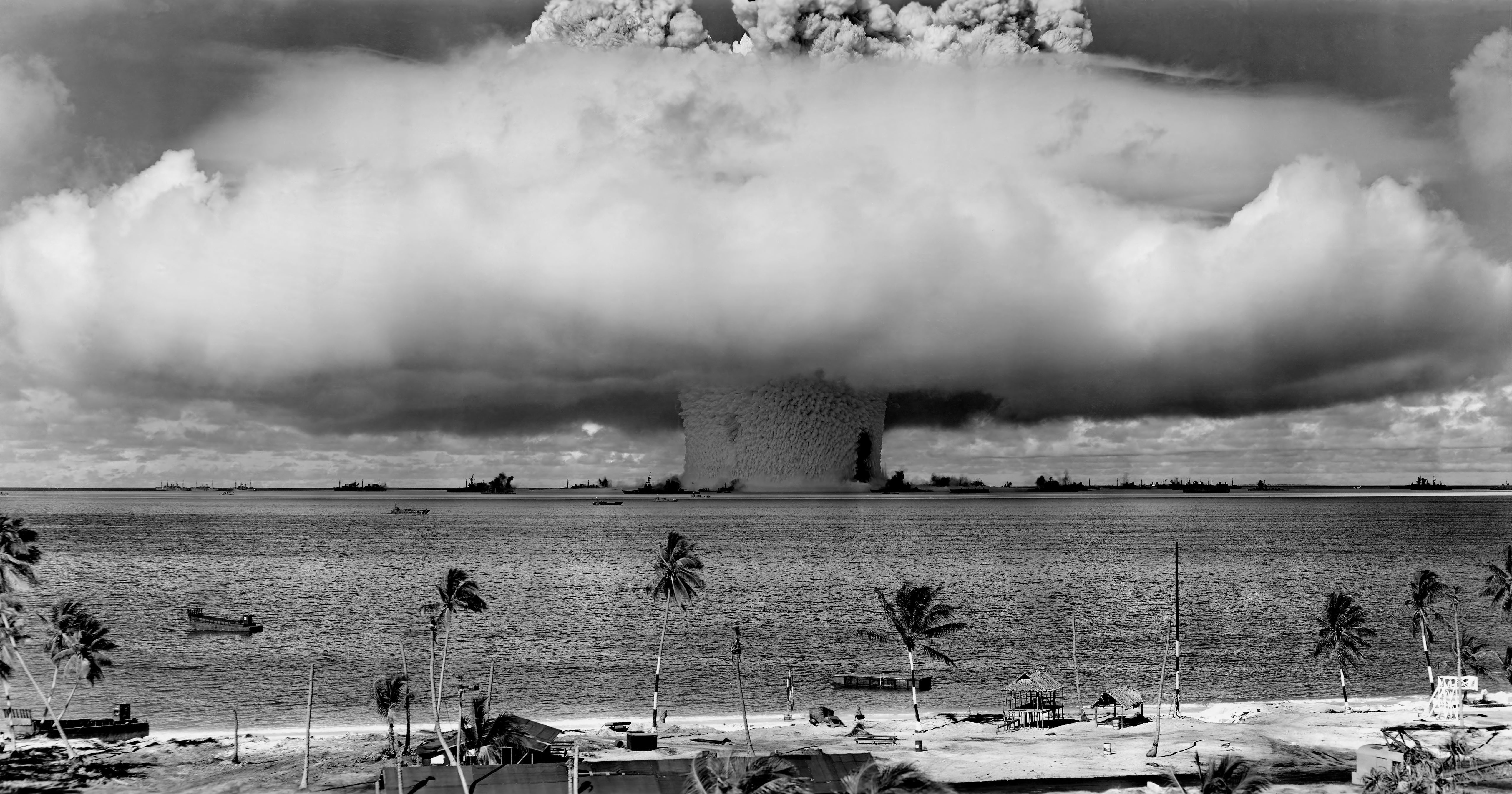
Justice has been served (sort of)…a tad late, but the Marshall Islands have put in motion some interesting legal proceedings. The islands have officially filed a lawsuit in the International Court of Justice against the United States and the eight other nuclear counties in the world.

Even though the Marshall Islands is not a country that comes to mind when thinking of an international law enforcer, when it comes to nuclear laws and regulation they have a special claim. Experiencing 67 nuclear tests over 12 years, the Marshall Islands have experienced the disasters of nuclear testing, which has directly affected the lives of their citizens and environment. Their attempt at wrangling world superpowers into the international law is admirable but ultimately futile. By grouping nine countries together the likelihood of getting all the countries to scale down their nuclear programs is next to impossible. Attempting to reinforce a non-nuclear norm will ultimately fail because the self-interest of individual nations trumps one small nations, rather legitimate, claim that expanding nuclear disasters is just inviting disaster. The only true possibility of denuclearization ultimately lies in the powerful countries not a comparatively insignificant nation like the Marshall Islands. Possibly, strong nations leading by example will send a message to others that denuclearization is a serious commitment that world leaders are willing to take.


The power dynamics involved in this situation parallel, to me, the burgeoning crisis in Ukraine. The situation there is a political disaster that is threatening the peace in the region. Much like the Marshall Islands, Ukraine has attempted to influence a world power, Russia, through international discourse, to little effect. Unfortunately in both of these situations I feel that the upper hand clearly lies with the world powers. Regardless of whether or not results are attempted via international courts and norms like the Marshall Islands, the best bet in situations like the lawsuit and in Ukraine is for these weaker states to court a truly influential state for support. Frankly, it is too soon to tell for both the nuclear litigation and the Ukrainian Crisis. Hopefully, one day the international institutions will be strong enough to allow for actual equality for weaker states struggling to influence the world. Whether it is the potential for nuclear disaster that the Marshall Islands fear or the expansion of a political disaster into open war that Ukraine fears, for now it seems as though the answers to those uncertainties lie in the hands of the powerful.

Thursday, April 24, 2014

Is natural adverse weather a disaster? A look at USDA "disaster assistance"


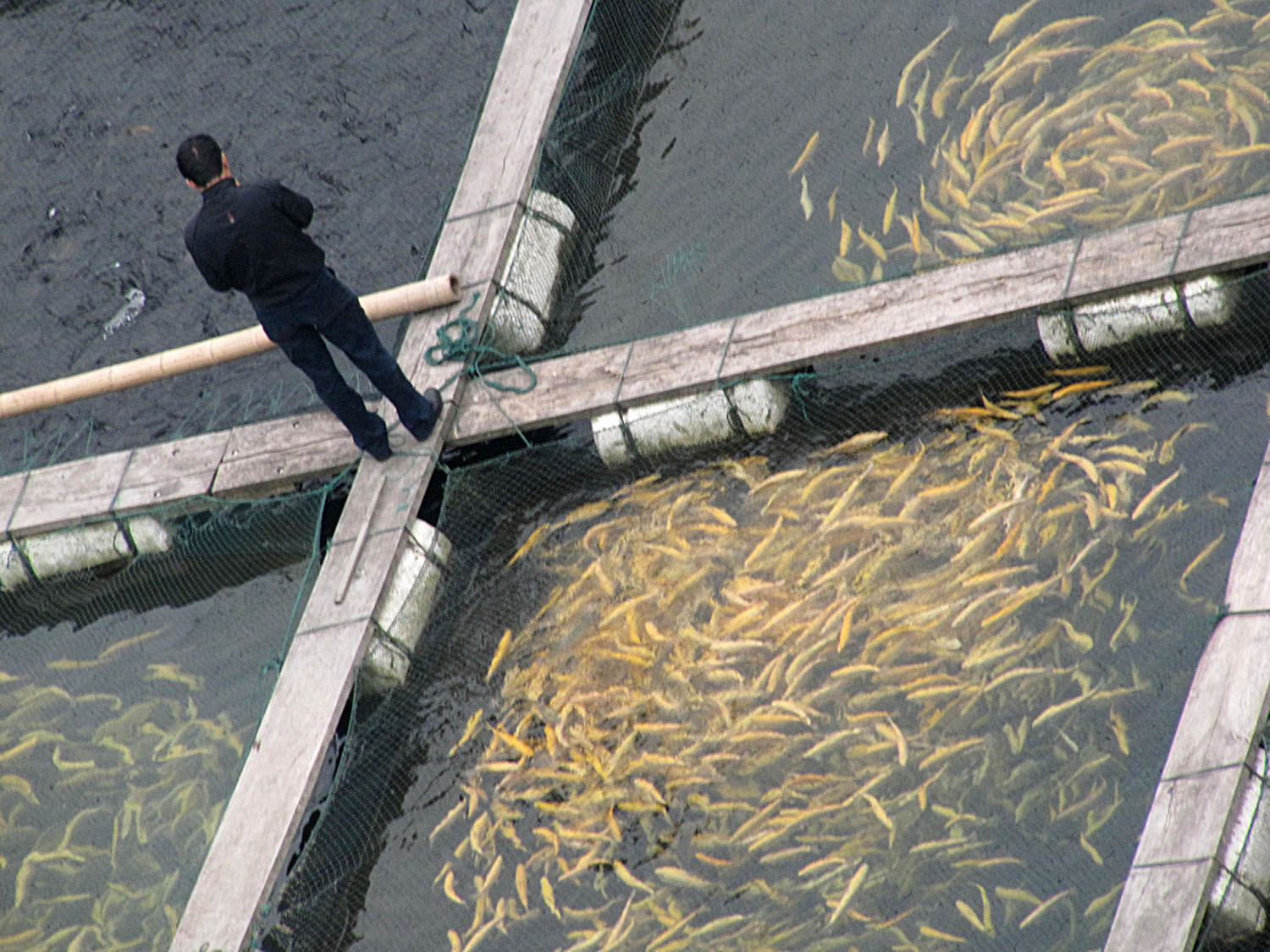
The USDA has recently announced that it will begin providing payments to eligible farmers who have experienced losses since the livestock disaster assistance programs expired in 2011 as a part of the 2014 Farm Bill. This policy will cover farmers who have experienced "excess of normal mortality [of livestock] due to adverse weather". This covers death losses as well as grazing losses due to weather events such as droughts, wildfires, even blizzards. Disease is also considered as a claim for "disaster assistance". The assistance is provided through three main agencies: the Livestock Indemnity Program, the Livestock Forage Disaster Program, and finally the Emergency Assistance for Livestock, Honeybees and Farm-Raised Fish Program. There different requirements producers must meet to qualify for aid from the different agencies such as certain time constraints, being on publicly managed land, being hit by a drought above a specified severity(D2, D3, D4), or owning/leasing the affected livestock.


Is adverse weather a problem for farmers? Yes. Is it a disaster? I'm not sure, but does it matter?

This post ties back into our first discussions on defining "disaster" and more recently our discussion on discourse. It is extremely hard to determine what is or isn't a disaster, it is a definite gray area. For the sake of argument, this post will continue under the assumption that this policy making is in fact in response to a disaster not just using "disaster" to draw a reaction (another possibility).

The grounds for the disaster assistance policy are the basics of the problem so to speak. Adverse weather is causing a loss in grazing lands as well death losses of livestock, honeybees, and fish. Droughts and wildfires are destroying grazing land. Droughts, fires, disease, blizzards and other events are increasing the normal mortality rate these producers experience.


The warrants are the justifications for the policy. On a macro level, when producers experience losses it impacts food prices and as a result could negatively impact the economy. On a micro level, this impacts the livelihoods of the producers thus impacting their individual spending habits as well as impacting the disposable income of the consumer again having an effect on the economy.


The conclusion is the specific outline for action. This is the requirements of each agency for a producer to receive aid as mentioned above. The USDA has already announced multiple states that will be receiving aid: Texas, Nevada, Arizona, Oklahoma, as well as Idaho among others. The policy provides payments for drought are "equal to 60 percent of the monthly feed cost for up to five months". The losses had to have occurred on or after Oct 1, 2011 and be documented thoroughly. The registration for disaster assistance began April 15, 2014. The hope is to mediate the economic impact of these adverse weather affects. Basics of the policy are outlined by the 2014 Farm Bill (see link below) but more specific details can be obtained from local offices.

While the debate could be had about whether these adverse weather affects are really substantial enough to be considered a disaster, the fact that the USDA is using disaster discourse is clear. The grounds, warrants, and conclusions are all present in their announcements, policy legislation as well as in the media.

2014 Farm Bill Fact Sheet http://www.fsa.usda.gov/Internet/FSA_File/lfp_2014_fbill.pdf
Other links:
http://www.fsa.usda.gov/FSA/webapp?area=home&subject=diap&topic=landing

Silence of the media in Syrian refugees


Following the topic for this week and last week simulation, I wanted to focus my blog post on media coverage of Syrian refugees. 
The Syrian refugee crisis, labeled by the UN as the greatest humanitarian crisis in modern history, has overpassed 2.4 million of people flowing out of the country. Despite the catastrophic evidence, mass media is being quite silent about this issue. One of the articles that I read compared the media coverage on the missing Malaysian airplane to the reports on Syrian refugees. In a week the news about the Malaysian Flight 370 were 1800 at LexisNexis, this article explains, whereas the stories about Syrian refugees were 241. 
There could be many reasons for this lack of media coverage, and as Jessi explained in her post, one of them could be the ‘glamourization’ of disasters. Reporting about a refugee crisis requires most of the time stories of families and how they are living outside their home country, stories that can seem repetitive and monotonous after months of same news. However, the Malaysian airplane news seem more attractive for the public because of the peculiarity of the situation. 
Another explanation is that a great deal of the problem of media coverage in the Syrian refugee crisis involves the lack of proper reportage. Finding the areas of interest, translation for the interviews or safe regions makes really difficult for reporters to find a good story to cover.  Due to this scarcity, many media outlets are forced to use the same fixers, and therefore have less to report, leading to sometimes empty news stories.

Lack of media coverage about Syrian refugees can lead to extreme consequences that aggravate the crisis. The first one is the international response. Media coverage is essential for public awareness, and consequently for public response to the disaster or crisis. CNN International, for instance, has facilitated public information of the refugee crisis in Syria, creating a specific section called ‘How you can help’. Not only CNN has tried to cover stories of this crisis but also cooperate for active humanitarian response. Other consequence of limited media reports on the Syrian refugees crisis is the view of this issue in the neighboring and host countries. For instance, lack of international media coverage forming an opinion to the crisis, has lead to Egyptian news to condemn Syrian presence. TV presenters have accused Syrians of undermining their country’s well-being and threatened violence upon the refugees. 


With all this evidence, we can see the importance of media coverage on disasters and the consequences when there is a lack of it. The Syrian refugee crisis, specifically, has been worsened by the limited media coverage. The solution to the biggest humanitarian crisis in modern history, could be in hands of the media. How much influence mass media can have on disasters response and disasters solving? Does the media increase our awareness and response to disasters? 

http://www.juancole.com/2014/03/reasons-refugees-malaysian.html
http://www.cnn.com/SPECIALS/middleeast/syrian-refugees
http://borgenproject.org/lack-media-coverage-syrian-refugees/

The Disaster of Disease


In our talks this semester, we have discussed man-made disasters, natural disasters, and technological disasters such as the heartbleed bug Pedro talked about in his blog last week. I was surprised though that we didn't talk one specific kind of disaster this semester- the disaster of disease.

I was watching CNN on Monday afternoon with my roommate when after a commercial break, the popular news station moved on to a segment from health correspondent Dr. Sanjay Gupta. He was reporting on Ebola, a dangerous virus that has been eradicated in most developed nations-was spreading rapidly throughout the African nations of Guinea and Liberia. I though to myself, "Ebola? Nobody gets that anymore, at least here in America anyways." The disease, attacks the immune system and brings fever, headache, muscle pain and bleeding and could kill if not treated immediately. 


Doctors Without Borders on the scene in Guinea treating individuals infected with the virus.

The report was such a shock to me, I had to jog my memory the last time I had heard about a disease outbreak. The only one I could think of was the cholera outbreak in Haiti last year, which was reported to have been the worst outbreak in history. The situation in Haiti is now under control, as in Africa the death toll keeps rising, but the number of people contracting the virus is slowing. According to the World Health Organization, Ebola is one of the world's deadliest viruses and kills about 90% of the people who end up contracting the virus. Currently, 142 people have died from the virus and there is now a race to keep the virus from spreading into other countries. Sierra Leone was believed to have 19 cases of individuals infected with the virus, but the results came back negative. Doctors in Guinea and Liberia have no experience dealing with the virus, as this is the first time it has emerged in Western Africa.

Map of the countries affected by the spread of the virus.

Because Guinea and Liberia are not large nations, its geography could pose the potential problem of an entire nation being wiped out from the spread of disease. You could also look at this from a disaster stand point as well. While globalization becomes ever present in many developing nations-such as those in Africa- not only is there the spread of ideas and communication, but the spread of disease as well. What surprises me is that we do not treat the spread of deadly disease as a disaster. Roughly 36 million people worldwide are living with HIV/AIDS, a deadly virus that has become a widespread pandemic globally. So many people around the world are dying from the virus, but we often regard such a thing just as "pandemic". I think it's so much more than that. When we talked about natural disasters, we argued how it was a government's job to prepare, for the international community to intervene if the necessity prevailed, etc. The same went for any other disasters we discussed in class. I think those same principles can be applied regarding the spread of disease as a disaster. The Ebola outbreak is the evidence of that.

South Korea: Accountability and the Role of Culture in Disasters

On Wednesday, April 16th off the coast of South Korea, a ferry containing 476 people sank due to undetermined causes, claiming 171 lives. Many of the dead and missing are high school students and faculty on a school trip. This disaster has shocked and horrified the Korean people, and called into question how something like this could have happened. It brings up interesting issues of accountability in disasters—at the end of the day, who is responsible when things go wrong on such a monumental level? It also brings up an interesting commentary on the role that culture plays in disaster response and management.
South Korea is a country that has pulled itself out of poverty to become the world’s 15th-largest economy, which makes it even more stinging that this is being labeled a “third-world disaster.” Choi Kang, vice president of the Ansan Institute for Policy Studies in Seoul, said “we are supposed to be a prosperous middle power, but the fundamentals are still weak.” Part of the reason why the death toll was so high was because the crew was inexperienced and did not follow emergency procedures. They failed to notify the coast guard until 53 minutes in, and the captain and crew left the ship before even notifying most of the passengers as to what was going on. South Korean President Park Geun-hye, lashes out at them on Monday, saying the "behavior of the captain and some crew members is beyond understanding and no better than homicide." However, Park also faces accusations that her newly restructured Ministry of Security and Public Administration failed at its first disaster response. Not only that, but the boat was said to have had technical problems before the incident even occurred. In this situation, a lot of people are pointing fingers, but it is difficult to say who is responsible for poor crisis management in the wake of a completely preventable disaster like this. It also brings up a point we talked about in class, which was disaster preparedness and the importance of existing infrastructure. Although this is a relatively wealthy country, it did not have the fundamentals in place for an efficient response, which ultimately lead to the deaths of many students.


This also brings up the cultural aspect of disaster management. Since Korean children are taught to respect their elders from a young age, the students on the boat obeyed orders to stay in their cabins, and died because of it while the crew escaped. This has caused a huge sense of collective guilt among Koreans. “Koreans are very nationalistic and they take pride in the rapid development of their country. When there’s some problem or anything that reflects poorly on the collective, on the nation or Koreans on the whole, people will get upset about it,” said Daniel Pinkson, head of International Crisis Group in Seoul. It would be interesting to discuss in class the effects of cultural values on how people respond to a disaster (i.e. how a more individualistic nation like the U.S. would respond as opposed to a more collectivist one like China).

Sources: http://abcnews.go.com/International/ferry-disaster-left-south-korea-traumatized-shamed/story?id=23437866&singlePage=true
http://www.latimes.com/world/asia/la-fg-south-korea-calamity-20140423,0,480756,full.story#axzz2zmZMFOlH